
If your dentures feel looser and your mouth feels dry, you may be wondering whether you need a new set. Start the conversation with both concerns rather than asking only about replacing the denture.
The short answer
Dry mouth can make acrylic dentures feel loose because saliva helps them stay against the gums. Medicines or dehydration may contribute to dryness, so discuss both the symptoms and the fit with your dentist. Byford Smiles usually spends an hour on an initial examination; confirm the appointment type and length when booking.
By Abhi Singh, Byford Smiles.
Can dry mouth make dentures feel loose?
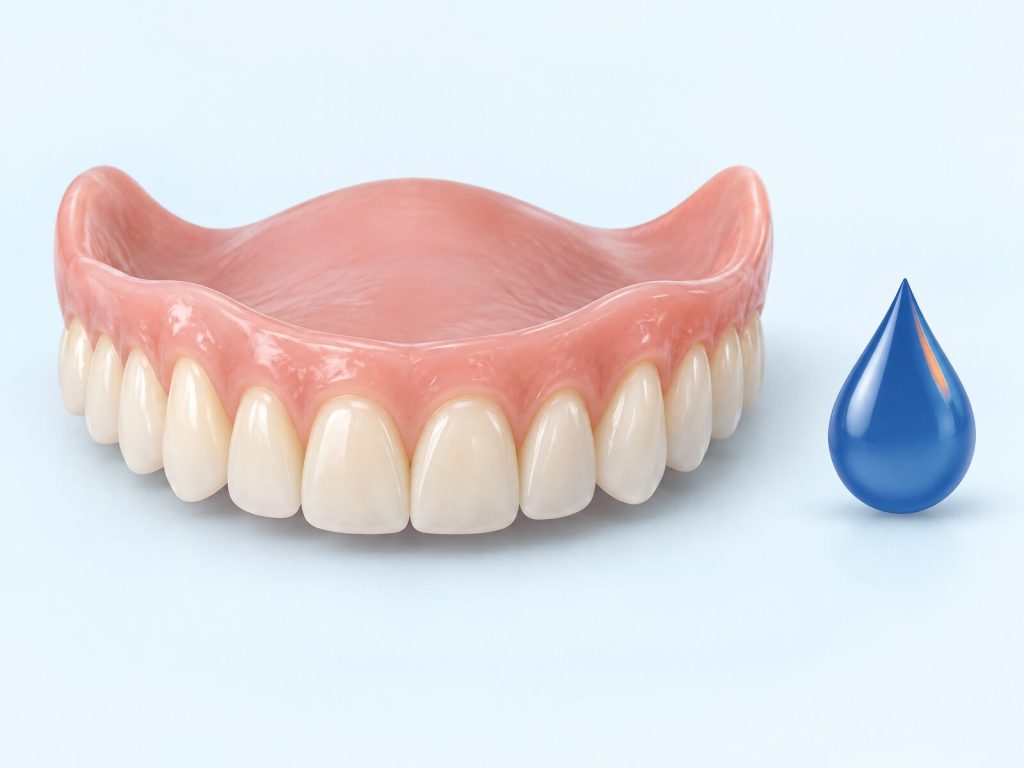
Yes, dry mouth can affect the suction that helps an acrylic denture stay against the gums. Victoria’s Better Health Channel specifically identifies loose acrylic, non-metal dentures among the symptoms of dry mouth. Better Health Channel’s dry-mouth guidance explains the role of saliva between the gum tissue and the acrylic base.
That link is useful, but it doesn’t tell you why your own denture is moving. The guidance refers specifically to acrylic dentures, not every type of denture attachment. Ask the dentist to consider the dryness alongside the fit rather than assuming that treating one will settle the other.
It can help to describe what happens in ordinary situations: does the denture move when you talk, during a meal, or throughout the day? Is the dryness a recent change? You don’t need to diagnose the problem before booking. Bring those observations so the conversation starts with what you are experiencing.
What might be causing the dryness?
Some medicines, dehydration and certain medical conditions can contribute to dry mouth. Finding the cause may involve examining your mouth and teeth and reviewing your symptoms and medical history, according to Better Health Channel.
Before your visit, note when the dryness began, when you first noticed the denture moving and any recent medicine changes. Bring your medicine list so you can discuss it rather than trying to work out the cause yourself.
Dryness can show up as sticky or stringy saliva, a rough tongue, cracked lips, or difficulty chewing and swallowing dry foods. Better Health Channel also lists burning sensations and mouth ulcers. Mention these symptoms when you book, particularly if eating has become difficult, rather than describing the appointment only as a denture-fit check.
The table below separates possible contributors from questions for your assessment. It is based on Better Health Channel’s guidance, reviewed September 2025, and Byford’s denture information. It is not a way to identify the cause at home.
| What may be involved | What to discuss |
|---|---|
| Reduced saliva around an acrylic denture | Saliva helps the acrylic base stay against the gums. Ask whether dryness could be contributing to the movement and what the denture assessment shows. |
| A medicine or recent medicine change | Some medicines can reduce saliva. Bring the names and ask whether your prescribing doctor needs to review them; do not stop a medicine yourself. |
| Dehydration | Not having enough fluid can cause thick saliva and dryness. Describe your symptoms and ask what may be contributing, especially if you have a medical condition affecting fluid balance. |
| Mouth breathing or another health concern | Better Health Channel includes mouth breathing and some medical conditions among possible causes. Mention relevant health changes so your dentist or doctor can investigate. |
| The denture’s fit | Byford’s published denture process includes fitting adjustments. Ask what, if anything, needs changing in your case; a loose denture does not by itself explain the cause of a dry mouth. |
What should I ask at the appointment?
- Could dryness be affecting my denture, and what else needs checking?
- Does my denture need an adjustment, or should we discuss other options?
- Could any of my medicines be contributing, and should I speak with my doctor?
- Which cleaning products and overnight storage instructions suit this denture?
- What care do my remaining teeth and gums need?
Should I change a medicine or buy a dry-mouth product?
Speak with your doctor before stopping or changing a medicine because of dry mouth. The prescriber may be able to review the dose or consider another medicine, but a change is not always possible. Better Health Channel advises continuing your medicine unless you have discussed it with your doctor.
Ask your dentist which dry-mouth product suits you before choosing one. Better Health Channel describes products such as gels and mouthwashes and advises getting a dentist’s recommendation. Bring the names of any products you already use, including denture adhesive.
A product recommendation should also take account of your remaining teeth. Better Health Channel distinguishes products used to moisten the mouth from dental products intended to help prevent decay. Ask what each recommended product is for, how to use it and whether it replaces anything you currently use. A familiar brand name alone won’t answer those questions.
If you use denture adhesive, mention that too. Better Health Channel says adhesive products may be recommended for denture wearers, but it directs readers to their dentist for advice. Ask whether an adhesive is appropriate for your denture and how to remove it during cleaning, rather than choosing one as your only response to new looseness.
How should I clean and store my dentures overnight?
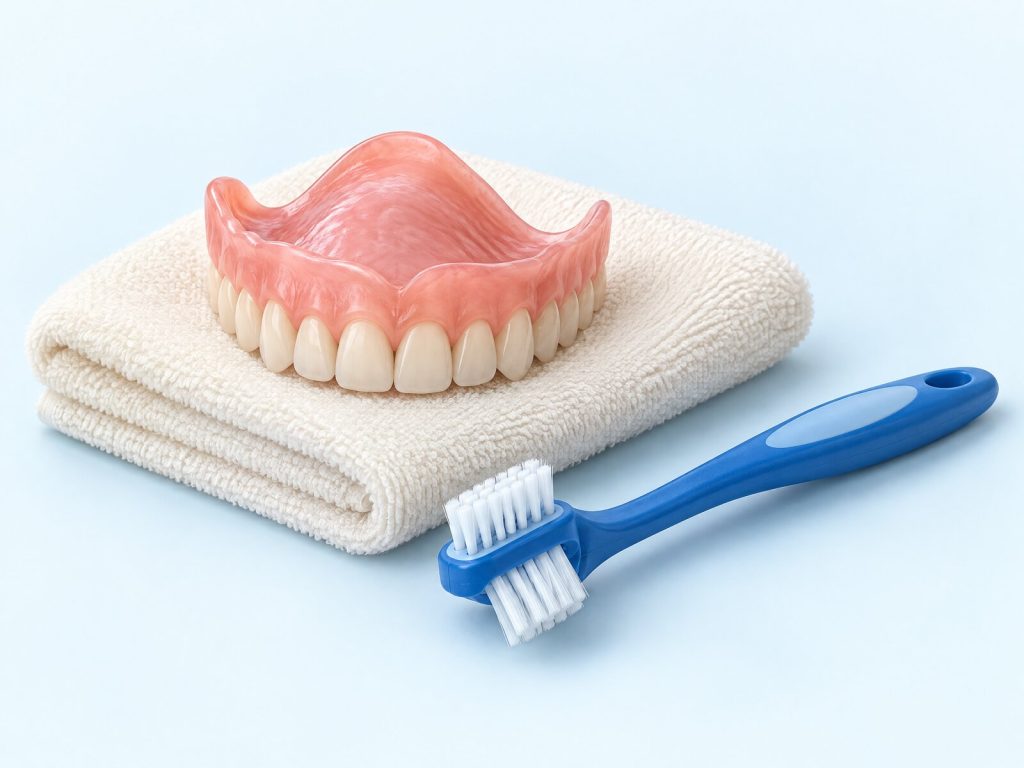
Take removable dentures out for sleep. Our denture-care page advises against sleeping in them and says not to leave them soaking in cleanser overnight.
For cleaning, the page recommends a soft brush with non-abrasive cleanser or dishwashing liquid, rather than toothpaste. It also suggests cleaning over a bowl of water or a folded towel in case you drop the denture, and brushing its underside, especially when you use adhesive.
Ask your dentist: “Which cleaner should I use, how long should I use it for, and where should I put my denture after cleaning?” Get instructions for your own denture rather than treating a cleaning soak as an overnight storage plan.
There are two separate questions here: how to clean the denture and how to store it while it is out of your mouth. Byford’s page describes a short cleanser soak followed by rinsing and drying. That is cleaning guidance, not a universal instruction for overnight storage. Have your dentist confirm the routine for your denture and the product you use.
Toothpaste advice also needs that distinction. The denture page says not to brush the appliance with toothpaste, while Better Health Channel recommends fluoride toothpaste for natural teeth. Ask for separate instructions for the denture, your gums and any remaining teeth so one routine isn’t mistakenly applied to everything.
What if I still have some of my own teeth?
Your remaining teeth need checking as well as the denture. Better Health Channel’s dry-mouth guidance, reviewed 9 September 2025, identifies the gumline and lower front teeth as places where decay can develop when saliva’s protection is reduced. Ask your dentist to check these areas when you discuss the loose denture.
For daily care, Better Health Channel recommends fluoride toothpaste, brushing at least twice a day and cleaning between teeth once a day. Ask how often you need check-ups; people at higher risk of decay may need more frequent visits.
Byford Smiles provides gum disease treatment as well as full and partial dentures. If you also have a fixed bridge, our existing article on tooth decay beneath a dental bridge covers that separate concern.
What should I tell the dentist about eating and drinking?
Tell them which foods have become difficult and what you use to relieve the dryness. Better Health Channel notes that dry mouth can make dry foods harder to chew or swallow. Its dietary guidance also advises avoiding sugary and acidic drinks, which can damage teeth, and asking a dentist for individual suggestions.
Denture advice and dry-mouth advice can need bringing together. Better Health Channel suggests sugar-free gum to encourage saliva, while Byford’s denture page cautions that sticky foods can make dentures slip. Ask what suits your appliance instead of assuming every general dry-mouth tip will be comfortable for you. The denture page suggests starting with soft foods and cutting food into small pieces when learning to eat with dentures.
A checklist for your visit
Use this list to prepare for the symptom and medical-history discussion described by Better Health Channel and Byford’s first-visit page:
- Write down when you first noticed the dryness and when the denture began moving, including whether they started together.
- List your current medicines and any recent changes, including products you buy without a prescription.
- Note soreness, ulcers, sticky saliva or trouble eating, and tell the booking team about symptoms that concern you.
- Bring the names or packaging details of your denture cleaner, adhesive and any dry-mouth products.
- Write down your current cleaning and overnight storage routine, including how long you use any cleanser.
- Ask the clinic what to bring for the denture assessment and whether the booked appointment is an initial examination or another appointment type.
- Keep your main questions together, including what needs checking, the proposed next step and its cost.
What happens next at Byford Smiles?
Our first-visit information describes a dental examination and a discussion of your medical history before necessary treatment. The published estimate is about an hour for the initial examination; confirm the appointment type and length when booking.
Our denture service includes full and partial dentures, with impressions and fitting adjustments described in the published process. Ask what the assessment finds and what the proposed next step would cost.
The cost of a new denture depends on its type, how many teeth are being replaced and any other procedures needed. Ask for an estimate for the recommended work.
If dryness is bothering you, see your doctor or dentist to investigate the cause. Tell the booking team if your mouth is sore or you have noticed ulcers rather than treating this only as a replacement-denture enquiry.
Call 08 9532 0247: “My mouth feels dry and my denture has started moving. I’d like an appointment to discuss both.”
What should I check with my health fund?
If you have private cover, ask your insurer what your policy includes before agreeing to proposed dental work. Services Australia distinguishes general treatment cover for services such as dental care from hospital cover.
“Insurers can tell you what they’ll pay for and how much they’ll pay.”
— Services Australia, Private health insurance and Medicare, What insurance covers (checked 20 October 2026). © Commonwealth of Australia. Reproduced under CC BY 4.0.
Sources
- Reference: www.betterhealth.vic.gov.au — Better Health Channel: Dry mouth, reviewed 9 September 2025.
- Byford Smiles: Dentures.
- Byford Smiles: First visit expectations.
- Services Australia: Private health insurance and Medicare, What insurance covers.
Sources checked 20 October 2026. This is general published guidance, not advice about your own care.
Photos in this article are AI-generated illustrations, not photos of Byford Smiles, its staff or patients.


