Clinical review: Reviewed by Dr Abhishek “Abhi” Singh (Dentist), AHPRA registration DEN0001639626.
Last updated: 6 July 2026.
If you have been told you may need a wisdom tooth removed, it is normal to wonder whether the procedure will hurt. The short answer is: once the area is properly numbed, you should not feel sharp treatment pain during the removal itself, but you may feel pressure, movement or pushing sensations. Some discomfort after the anaesthetic wears off is also normal, especially in the first few days.
How much discomfort you feel depends on the position of the tooth, whether it is impacted, how complex the removal is, your general health, and how closely you follow your aftercare instructions. Your dentist can explain what applies to your specific tooth after examining your mouth and X-rays.
Important: Any surgical or invasive procedure carries risks. Before proceeding, you should seek a second opinion from an appropriately qualified health practitioner. Individual results may vary.
Why wisdom teeth sometimes need to be removed
Wisdom teeth are the back molars that often appear in the late teens or early twenties. Some come through without causing trouble. Others do not have enough room to emerge cleanly or sit at an angle under the gum. These are commonly called impacted wisdom teeth.
A wisdom tooth may need assessment or removal if it is linked with:
- repeated pain, swelling or gum irritation around the back of the mouth
- food trapping that is difficult to clean
- decay in the wisdom tooth or the tooth in front
- infection around a partly erupted tooth
- pressure on nearby teeth
- cysts or other changes seen on an X-ray
Removal is not always the answer. If a wisdom tooth is healthy, easy to clean and not causing problems, your dentist may recommend monitoring it instead.
How painful is wisdom tooth removal during the appointment?
Your dentist will normally use local anaesthetic to numb the area around the tooth before treatment begins. Once the anaesthetic is working, many people describe the feeling as pressure or movement rather than sharp pain. You may be aware of pushing, vibration, water spray, or the dentist working at the back of your mouth.
If you feel sharp pain during the appointment, tell the dental team. They can pause and check whether more anaesthetic or a different approach is needed.
Some people feel anxious even when the area is numb. If that is you, ask your dentist what options are suitable. Depending on your needs and the complexity of the extraction, this may include extra time, breaks during treatment, or a discussion about local anaesthetic and sedation options.
Related Byford Smiles guide: Local anaesthesia vs sedation for wisdom teeth removal.
What types of discomfort are normal after wisdom teeth removal?
After the anaesthetic wears off, it is common to have soreness around the extraction site. You may also notice jaw stiffness, mild swelling, tenderness when opening your mouth, and some oozing or blood staining in the first day.
Discomfort is often strongest during the first 24 to 72 hours, then should gradually settle. More complex extractions can take longer to feel comfortable than simple removals. If stitches are placed, the area can feel tight or tender while it heals.
Your dentist will explain which symptoms are expected for your case and what to do if the recovery does not follow the expected pattern.
A simple recovery timeline
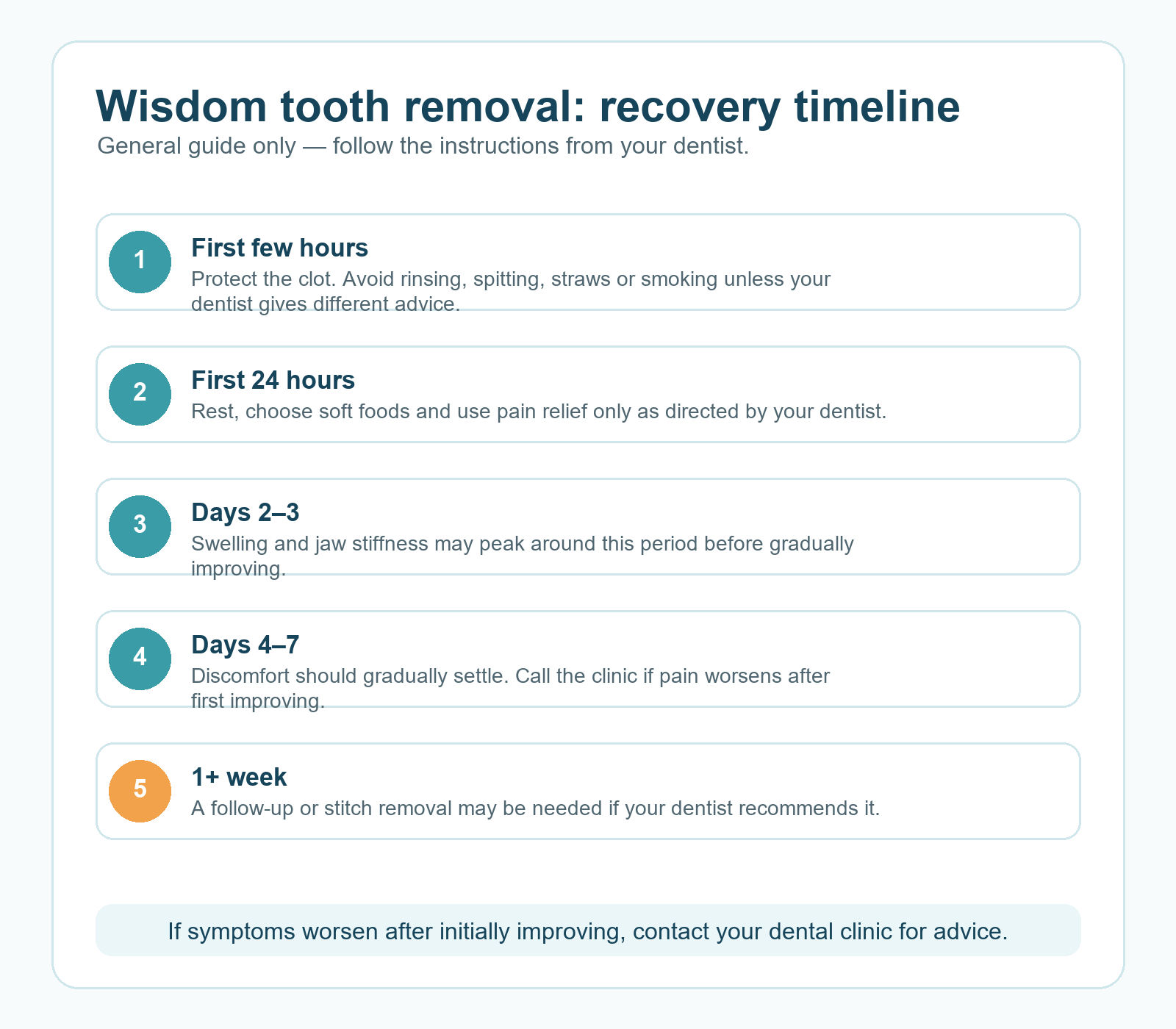
First few hours
The anaesthetic will slowly wear off. Bite on gauze if instructed. Avoid rinsing, spitting, smoking, alcohol, and drinking through a straw unless your dentist gives different advice. These actions can disturb the early blood clot that helps the socket heal.
First 24 hours
Rest, keep your head elevated where practical, and follow the pain-relief instructions provided by your dentist. Choose soft foods and avoid chewing directly near the extraction site. Some swelling and tenderness can be expected.
Days 2 to 3
Swelling and stiffness may peak around this period before improving. If your dentist has advised gentle salt-water rinses after the first day, follow their instructions carefully. Continue soft foods if chewing is uncomfortable.
Days 4 to 7
Many people start to feel a clear improvement. You may still need to avoid hard, crunchy or seedy foods that could irritate the area. If discomfort suddenly worsens after initially improving, contact the clinic for advice.
After one week
Simple extraction sites often feel much better. Complex or surgical removals can take longer. Your dentist will tell you whether a follow-up visit or stitch removal is needed.
Will I need stitches?
Not every wisdom tooth removal needs stitches. Stitches may be used when the gum has been opened or when the dentist wants to help protect the healing area. Some stitches dissolve on their own. Others need to be removed at a follow-up appointment.
If stitches are used, your dentist will explain how to clean the area and what to avoid while the gum heals.
Aftercare dos and don’ts
Do
- follow the written instructions from your dentist
- take medication only as directed
- rest on the day of treatment
- use soft foods while chewing is uncomfortable
- keep the area clean in the way your dentist recommends
- contact the clinic if pain, swelling or bleeding seems unusual for your recovery stage
Don’t
- smoke or vape during the early healing period
- drink through a straw in the first day unless your dentist says otherwise
- poke the socket with your tongue, fingers or objects
- rinse forcefully straight after treatment
- return to hard or crunchy foods before the area is ready
- ignore worsening pain after an initial improvement
When should you call the dentist?
Contact your dental team if you notice symptoms such as:
- bleeding that does not settle with the instructions you were given
- swelling that keeps worsening rather than improving
- pain that becomes severe or suddenly increases after first improving
- fever or feeling generally unwell
- a bad taste, discharge, or increasing difficulty opening your mouth
- numbness or altered sensation that does not improve as expected
These symptoms do not always mean something serious is happening, but they should be checked.
How Byford Smiles can help
At Byford Smiles, wisdom tooth advice starts with an assessment. Your dentist can check the position of the tooth, discuss your symptoms, review X-rays where needed, and explain whether monitoring or removal is more appropriate.
If removal is recommended, the team can talk you through what to expect, what anaesthetic options may be suitable, and how to prepare for recovery.
Before your appointment, it can help to ask what type of removal is expected, whether the tooth appears impacted, what you should eat beforehand, how long to plan for rest afterwards, and who to call if symptoms change. These practical questions make the recovery instructions easier to follow once you are home.
You can learn more about wisdom teeth removal and tooth extractions, or contact Byford Smiles to book an appointment.
Frequently asked questions
Is wisdom tooth removal painful?
During treatment, local anaesthetic is used to numb the area. You may feel pressure or movement, but you should tell the dental team if you feel sharp pain. After treatment, soreness and swelling can occur as the area heals.
How long does pain last after wisdom tooth extraction?
Discomfort commonly improves over several days. The timeline depends on the position of the tooth and how complex the removal was. If pain becomes worse after first improving, contact your dentist.
Is local anaesthetic enough for wisdom tooth removal?
Local anaesthetic is commonly used for wisdom tooth removal. Whether it is suitable for you depends on the tooth position, your health, the complexity of treatment, and your comfort level. Your dentist can discuss options before treatment.
Will I feel pressure during the procedure?
You may feel pressure, pushing or movement while the tooth is being removed. These sensations are different from sharp pain. Let the dentist know if anything feels uncomfortable or unexpected.
What should I eat after wisdom tooth removal?
Soft foods are usually easier while the area is tender. Avoid hard, crunchy, sticky or seedy foods until your dentist says they are suitable for your recovery.
Can I go back to work or school after wisdom tooth removal?
Some people return quickly after a simple extraction. Others need more rest, especially after a complex or surgical removal. Ask your dentist what is realistic for your treatment and daily responsibilities.
What is dry socket?
Dry socket can happen when the healing clot in the socket is disturbed or does not form as expected. It may cause increasing pain after the first few days. Contact your dentist if pain worsens after initially improving.
Do wisdom teeth always need to be removed?
No. If a wisdom tooth is healthy, functional, easy to clean and not causing problems, your dentist may recommend monitoring it.
Can I brush my teeth after wisdom tooth removal?
You should keep your mouth clean, but avoid disturbing the extraction site. Follow the cleaning and rinsing instructions from your dentist.
When should I book a wisdom tooth assessment?
Book an assessment if you have recurring pain, swelling, food trapping, difficulty cleaning the area, or concerns about a wisdom tooth seen on an X-ray.