
Written by: Dr Alefia Boxwala, General Dentist
Reviewed by: Dr Abhishek Singh, Principal Dentist (AHPRA DEN0001639626)
Clinical content: This article is informational and does not replace a personalised dental assessment.
Is wisdom teeth removal painful? During the appointment, local anaesthetic is used to numb the treatment area, so many patients describe pressure, pushing, vibration or movement rather than sharp pain. After the procedure, soreness and swelling are common for a few days, and the level varies with tooth position, impaction and personal pain tolerance.
This guide explains the experience in three phases: during the procedure, the first 24 to 48 hours, and the days that follow. It is written for people in Byford and nearby suburbs who want a realistic explanation before booking an assessment.
Any surgical or invasive procedure carries risks. Before proceeding, you should seek a second opinion from an appropriately qualified health practitioner. Individual results may vary.
Table of Contents
- What Does Wisdom Teeth Removal Actually Feel Like?
- Pain Management During the Procedure
- What to Expect During Recovery
- Factors That Influence Pain Levels
- Frequently Asked Questions
- When to Contact Byford Smiles
What Does Wisdom Teeth Removal Actually Feel Like?
Wisdom teeth removal usually feels different from ordinary toothache. The aim during the procedure is to numb the area being treated. You may still notice pressure, vibration from instruments, water spray, jaw stretching or a tugging sensation. If you feel sharp pain during treatment, tell the dentist so they can pause and reassess the anaesthetic.
Post-operative discomfort is different. Once the anaesthetic wears off, the gum and jaw tissues can feel sore because they have been stretched, lifted or treated surgically. This is common after both simple and surgical extractions. The first two days tend to feel more noticeable, then symptoms often begin settling over the next several days.
For a related myth-by-myth explanation, read separating fact from fiction about wisdom tooth removal pain.
Wisdom Teeth Removal: Pain Expectations by Procedure Stage
| Procedure stage | What you may feel | Why it happens | What helps |
|---|---|---|---|
| Before the procedure | Toothache, pressure at the back of the jaw, gum tenderness or no symptoms at all | Wisdom teeth can be partly erupted, impacted or inflamed | Dental assessment, X-rays if needed, and a clear treatment plan |
| During local anaesthesia | Brief sting or pressure as the anaesthetic is placed | The medicine is delivered near the nerves supplying the tooth area | Slow breathing, asking questions before treatment, and telling the dentist if sensation remains |
| During removal | Pressure, pushing, vibration, water spray or jaw stretching | The tooth and surrounding bone or gum tissue are being managed | Anaesthetic top-up if needed and rest breaks for the jaw |
| First 24 to 48 hours | Soreness, swelling, limited mouth opening and mild bleeding | Normal tissue response after an extraction | Cold compresses, rest, soft foods and medication as directed |
| Days 3 to 7 | Gradual easing, bruising in some cases, food awareness near the socket | Early healing and gum closure begin | Careful rinsing when advised, avoiding smoking, and following aftercare instructions |
Why pressure is not the same as pain
Local anaesthetic blocks pain signals from the treatment area, but it does not remove all awareness of touch and pressure. That distinction matters. A person may feel the dentist working, but the sensation should not feel like untreated dental pain. If it does, the team needs to know immediately.
Some people find the sounds and pressure more confronting than the physical sensation. This is one reason preparation helps. Knowing that pressure can be normal prevents surprise during the appointment and gives you a clearer way to describe what you feel.
Why experiences differ
Two people can have wisdom teeth removed and describe different recovery experiences. A fully erupted upper wisdom tooth may be quicker to remove than a lower tooth lying sideways under the gum. An infected gum flap, limited jaw opening, dense bone or nerve proximity can also change the plan.
Pain tolerance also differs. So does anxiety. A careful pre-operative assessment gives the dentist a better idea of whether local anaesthesia alone is likely to be appropriate or whether sedation should be discussed.
Pain Management During the Procedure
The main pain-control method for wisdom teeth removal is local anaesthetic. It numbs the tissues around the tooth so the dentist can work while the patient remains awake. For some patients, that is enough. For others, sedation may be considered because of anxiety, a strong gag reflex, complex impaction or the number of teeth being removed.
Local anaesthesia and sedation are not the same thing. Local anaesthesia works on the treatment area. Sedation affects awareness, relaxation and memory of the appointment, depending on the type used. Even when sedation is used, local anaesthetic is still usually part of the plan because the tooth area must be numbed.
For a deeper comparison, see local anaesthesia versus sedation for wisdom teeth removal.
Local anaesthetic: what to expect
The dentist first checks the area, explains the plan, and places local anaesthetic near the nerves supplying the tooth. You may feel a short sting or pressure at the injection site. After a few minutes, the lip, cheek, tongue or gum may feel thick, numb or tingly.
Before starting, the dentist may test the area. If you can still feel sharp sensation, say so. Numbness can take longer in inflamed tissue, and some patients need extra anaesthetic. Speaking up is part of good care, not a disruption.
Sedation: when it may be discussed
Sedation can be discussed when the procedure is expected to be more involved or when a patient feels unable to tolerate the appointment with local anaesthetic alone. The right option depends on medical history, medications, the complexity of the extraction and the setting where care is provided.
Sedation also changes practical planning. You may need someone to take you home and stay with you afterwards. You may need to avoid driving, alcohol, signing documents or operating machinery for a specified period. The clinic will give instructions based on the sedation method used.
Questions to ask before treatment
A useful pre-operative conversation is specific. Ask whether your tooth is fully erupted, partly impacted or fully impacted. Ask whether bone removal or tooth sectioning is expected. Ask what symptoms are normal afterwards and what signs should prompt a call.
You can also ask who will perform the procedure, what aftercare instructions you will receive, and whether your health fund may contribute. Byford patients planning costs can review health fund options for dental procedures before their appointment.
What to Expect During Recovery
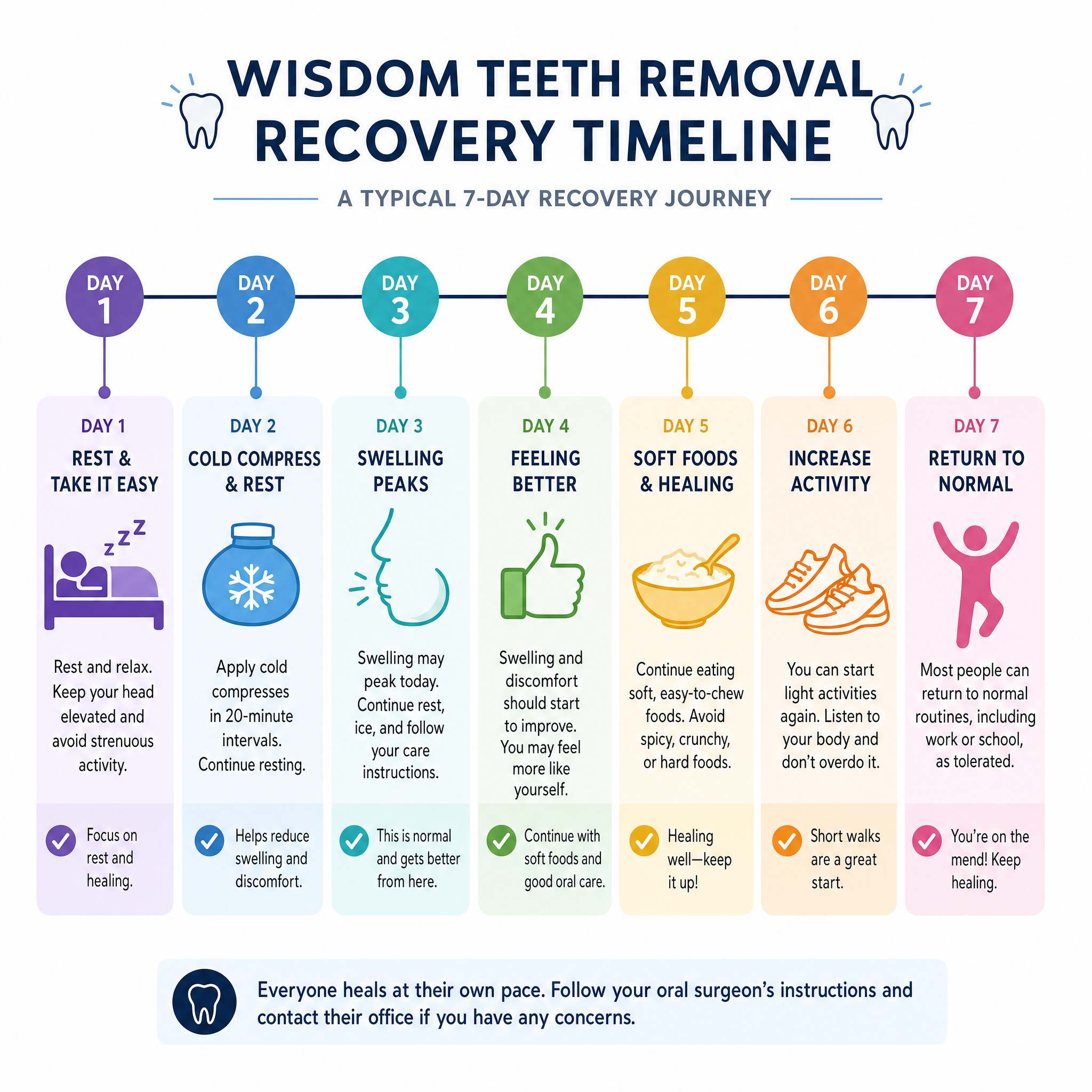
Recovery is usually most noticeable in the first 24 to 48 hours. Swelling, jaw stiffness, tenderness and some oozing can occur. For many patients, these symptoms then reduce across days three to five, although more complex surgical removals can take longer to settle.
The aim of aftercare is to protect the blood clot in the socket, reduce irritation and allow early healing. Follow the written instructions from your dentist, because advice can differ depending on how the tooth was removed and whether stitches were placed.
The first day
Plan a quiet first day. Rest with your head slightly elevated. Use cold compresses as directed, eat soft foods, and avoid hot drinks until the numbness has worn off. Chewing while numb can lead to accidental cheek or tongue biting.
Medication should be taken only as directed by your dentist, doctor or pharmacist. If you have asthma, stomach ulcers, kidney disease, blood-thinning medication, pregnancy considerations or allergies, ask before taking anti-inflammatory medication.
Days two to five
Swelling can peak around the second or third day. That does not always mean something is wrong. The jaw may feel tight, and chewing can still feel awkward. Soft foods, steady fluids and careful oral hygiene matter here.
Avoid smoking or vaping during early healing, as suction and heat can interfere with clot stability. Avoid drinking through a straw for the same reason. Do not poke the socket with your tongue, fingers or objects. It is tempting. It also irritates the area.
Ongoing healing
By the end of the first week, many patients feel more comfortable, but the gum socket can take longer to close fully. Food trapping may occur while the area is still open. Your dentist may recommend gentle rinsing at a certain point, but timing matters, so follow the instructions you are given.
If stitches are used, they may dissolve or require removal. If a follow-up appointment is recommended, attend it even if the area feels better. The check is about healing, not only pain.
Signs that need advice
Contact the clinic if pain worsens after initially improving, bleeding remains heavy, swelling increases after several days, fever develops, pus appears, or you notice a bad taste that does not settle. These signs can point to infection, dry socket or another issue needing review.
Dry socket can occur when the blood clot is lost or breaks down too early. It often causes increasing pain a few days after removal and may radiate toward the ear. It can usually be managed by a dentist, but it should not be ignored.
Factors That Influence Pain Levels
Pain after wisdom teeth removal is not random. It is linked to anatomy, tooth position, inflammation, surgical complexity and how closely aftercare instructions are followed. This is why a personalised assessment is more useful than comparing your recovery with someone else.
Tooth position
A fully erupted wisdom tooth has already come through the gum. If it has a simple root shape and enough access, removal may be more straightforward. A partly impacted tooth is only partly through the gum and can trap food or bacteria under a gum flap.
A fully impacted tooth sits under gum, bone or both. These cases may require a surgical approach, including lifting the gum, removing a small amount of bone or dividing the tooth into sections. More tissue handling can mean more swelling and soreness afterwards.
Lower jaw nerve proximity
Lower wisdom teeth sit near important nerves that supply sensation to the lip, chin and tongue. When an X-ray suggests the roots are close to those nerves, the dentist may discuss extra imaging, altered treatment options or referral.
This does not mean nerve changes will happen. It means the risk needs to be assessed before treatment, explained clearly, and weighed against the problems caused by leaving the tooth in place. Good planning helps patients make a more informed decision.
Infection and inflammation
A tooth removed during active infection or repeated gum inflammation may be more tender around the procedure. Inflamed tissues can also respond differently to anaesthetic. Your dentist may recommend managing infection or swelling before removal, depending on the situation.
The timing of removal can also matter. A wisdom tooth that repeatedly flares up may become harder to live with, but removal still needs proper assessment. The goal is not to rush; it is to choose a plan based on evidence from your mouth and X-rays.
The treating dentist and pre-operative planning
The dentist’s assessment, communication and technique all influence the experience. A good appointment starts before the tooth is touched: medical history, medications, allergies, anxiety level, X-rays, procedure explanation and aftercare planning.
The experienced Byford Smiles dental team can assess tooth position, discuss anaesthetic and sedation options, and explain what recovery may involve for your case. That pre-operative conversation is often where anxiety starts to reduce.
Frequently Asked Questions
Will I be awake during the procedure?
If your wisdom tooth is removed with local anaesthesia only, you will be awake. The area is numbed, but you may feel pressure or movement. If sedation is used, your level of awareness depends on the sedation type and your individual response.
How long does pain last after wisdom teeth removal?
Discomfort is commonly most noticeable during the first 24 to 48 hours and may improve over three to five days. More complex removals can take longer. If pain worsens after initially improving, contact the clinic for advice.
What helps with wisdom tooth pain while waiting for an appointment?
While waiting, keep the area clean, choose soft foods if chewing hurts, use medication only as directed on the label or by a health professional, and avoid placing aspirin directly on the gum. If swelling, fever or spreading symptoms occur, seek dental advice promptly.
Does an impacted wisdom tooth hurt more after removal?
It can, because impacted teeth may require more tissue handling than fully erupted teeth. The level of discomfort still depends on the tooth angle, root shape, inflammation, procedure length and aftercare. Your dentist can explain the likely recovery after reviewing X-rays.
Can I work the next day?
Some people return to desk-based work quickly, while others need more time, especially after surgical removal or sedation. If your job involves driving, lifting, heat, dust or physical work, ask your dentist what is reasonable for your case.
When can I eat normally again?
Start with soft foods and increase texture as comfort allows. Avoid hard, crunchy, spicy or very hot foods early on, as they can irritate the socket. Chew away from the extraction area if possible and follow the clinic’s written advice.
When to Contact Byford Smiles
Wisdom teeth removal should not be reduced to a single answer about whether it hurts. The more useful question is what you are likely to feel during each phase and what can be planned before treatment. During removal, pressure and movement are common. After removal, soreness and swelling are expected for a short period, with careful monitoring for changes that need review.
If you are in Byford or nearby and your wisdom teeth are causing pain, swelling, food trapping or repeated gum irritation, contact Byford Smiles to discuss an assessment. The team can review your symptoms, take appropriate imaging if needed, and explain options in plain language before you decide what to do next.


