
If you’re sorting this out near Byford Smiles in Byford, this guide walks through what usually happens and what only a check-up can decide.
If you’re worried that having a wisdom tooth removed will hurt, you’re not being dramatic. It’s often the part people think about most, especially if they’ve already had toothache or heard an unsettling story from someone else.
The honest answer is that discomfort varies. During the procedure, local anaesthetic is used so the area is numb, although you may still notice pressure, movement or vibration. Once the numbness wears off, tenderness and swelling are expected for a while. How much you notice depends on the position of the tooth, how involved the removal is, your general health and how your body responds.
An examination is the only way to judge what your own procedure may involve. This article explains the usual pattern, what can help afterwards and which changes deserve an earlier call to your dentist.
If you are worried about the pain
A lot of the worry comes from not knowing what will happen. You might picture feeling every part of the procedure, or you may be concerned that you won’t cope once you get home. Those are useful concerns to raise at your consultation because they affect how your dentist explains the appointment and discusses anaesthesia or sedation with you.
Wisdom teeth don’t all behave the same way. One may have fully emerged and be relatively straightforward to reach. Another may sit partly beneath the gum, lean into the tooth beside it or remain within the jaw. Wisdom teeth can also contribute to pain, swelling, infection, decay and problems around the neighbouring tooth, as outlined in the Healthdirect guidance on wisdom teeth.
That doesn’t mean every wisdom tooth needs to come out. A dentist first checks your symptoms, gum, tooth position and surrounding structures. They may recommend monitoring the area, treating another cause of the discomfort or discussing removal. An examination may include dental imaging when clinically indicated, but the details depend on your circumstances.
For people seeking local care in Byford, Byford Smiles provides consultations for wisdom teeth. At that visit, it helps to mention previous difficulties with dental treatment, medicines you take, health conditions, allergies and any concerns about needles or sedation. Don’t try to tough it out. Clear information gives your dentist a better basis for planning the appointment with you.
During the procedure
The appointment begins before any tooth is removed. Your dentist confirms which tooth is being treated, reviews your medical information and talks through the plan. This is the time to ask what type of removal is expected, how long you may be at the clinic and what arrangements you’ll need for getting home.
What local anaesthetic does
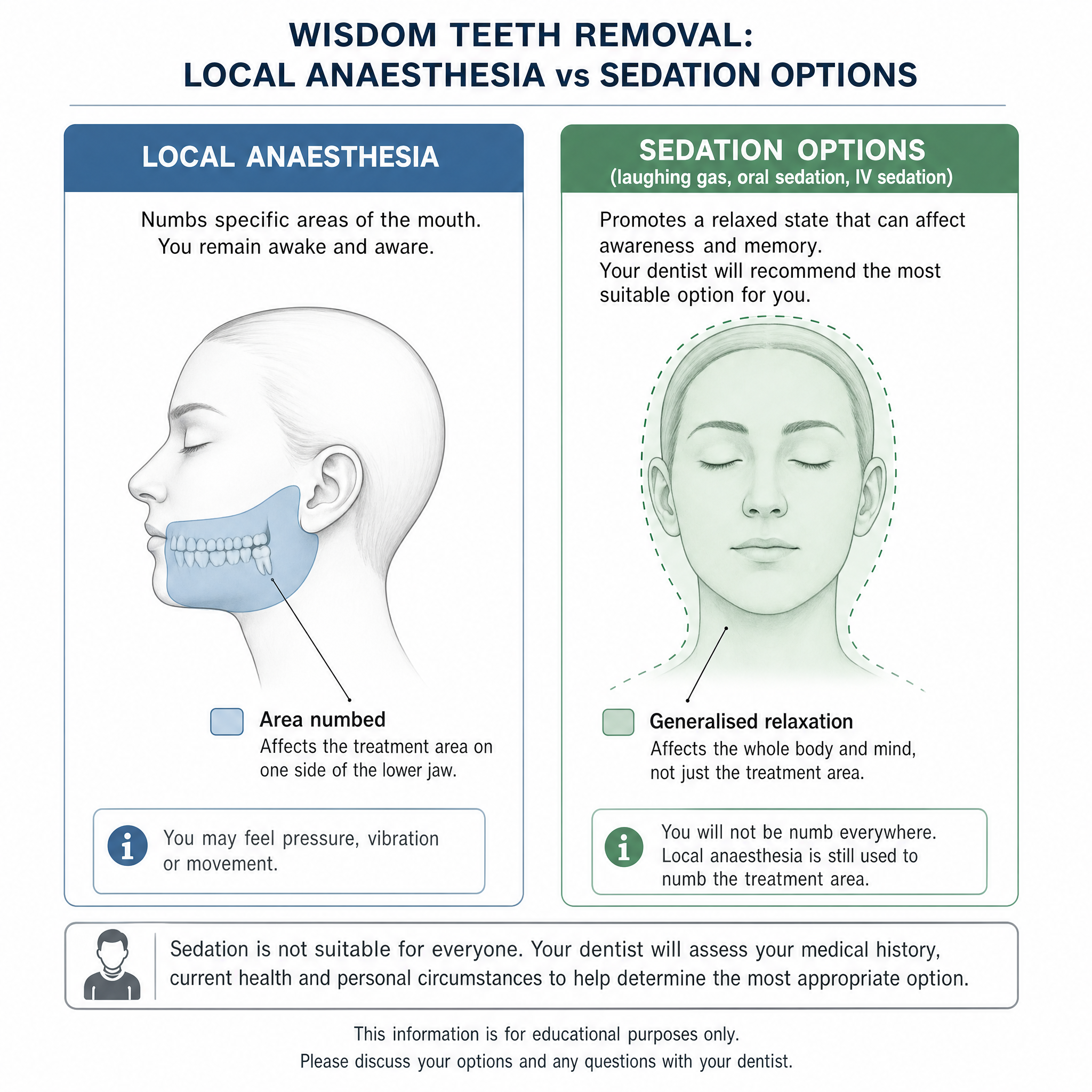
Local anaesthetic is placed around the treatment area to block pain signals for a period of time. You’ll usually notice the injection and then a spreading numb feeling in the gum, lip, cheek or tongue, depending on the tooth being treated.
Your dentist checks the area before proceeding. The aim is for you to notice pressure, pushing or movement rather than sharp pain. Pressure can feel strange and quite firm, but it isn’t the same sensation as the toothache that may have brought you in.
If you do feel something sharp, tell the dentist straight away. You don’t need to wait silently for the procedure to end. The dentist can pause, assess the numbness and decide what needs to happen next.
Sedation in plain language
Sedation and local anaesthetic have different jobs. Local anaesthetic numbs the treatment area. Sedation may reduce awareness or anxiety, but the experience and level of responsiveness vary according to the option used.
Byford Smiles offers local anaesthesia and sedation options for wisdom teeth removal. Not every option suits every person. Your dentist must consider your medical history, medicines, the planned procedure and how you’ll travel home. Some forms of sedation also require preparation beforehand and supervision afterwards, so follow the instructions provided for your particular appointment.
Sedation isn’t something to organise casually on the day. If you think you may want it, raise that during the consultation so there’s time to discuss the limits, risks and practical arrangements.
What may feel unusual
You may hear instruments, feel pulling or notice vibration through your jaw. With a lower wisdom tooth, keeping your mouth open can also leave the jaw muscles tired afterwards. Let the clinical team know if you need a pause or feel unwell.
The exact steps differ. A tooth that has emerged may be loosened and removed, while a tooth beneath gum or bone can require a more involved approach. Only your dentist can explain which description applies after examining you.
The first few days after
Once the numbness begins to fade, a dull ache or tenderness can start. Swelling may become more noticeable over the next couple of days, and your jaw may feel stiff. Eating, talking and opening wide can take more effort than usual.
The pattern matters more than one isolated moment. Some discomfort shortly after removal is expected; discomfort that keeps intensifying, returns strongly after starting to settle or comes with other concerning symptoms needs attention.
Discomfort timeline (typical, not a promise)
| Stage | What many people notice | What to do |
|---|---|---|
| Day of treatment | Numbness wearing off; dull ache can start | Rest; use medicine only as directed |
| Days 1–3 | Peak swelling and tenderness for many | Soft foods; keep the area clean as advised |
| After that | Steady settle for most people | Call sooner if pain worsens or feels wrong |
This table is a broad guide, not a schedule your body has to follow. The number and position of teeth removed, the complexity of treatment, smoking, existing infection and your general health may affect recovery. Your dentist’s written instructions take priority because they’re based on the procedure you actually had.
What is expected, and what is not
Tenderness, mild oozing, swelling and restricted mouth opening can occur early in recovery. You may also need to adjust what you eat until chewing feels easier. These changes should generally move in the right direction rather than becoming steadily more intense.
Pain that becomes severe, swelling that continues to expand, a fever, difficulty swallowing or breathing, or bleeding that won’t settle isn’t something to watch for several more days. Contact the clinic promptly. Breathing or swallowing difficulty requires urgent medical attention.
What actually helps recovery
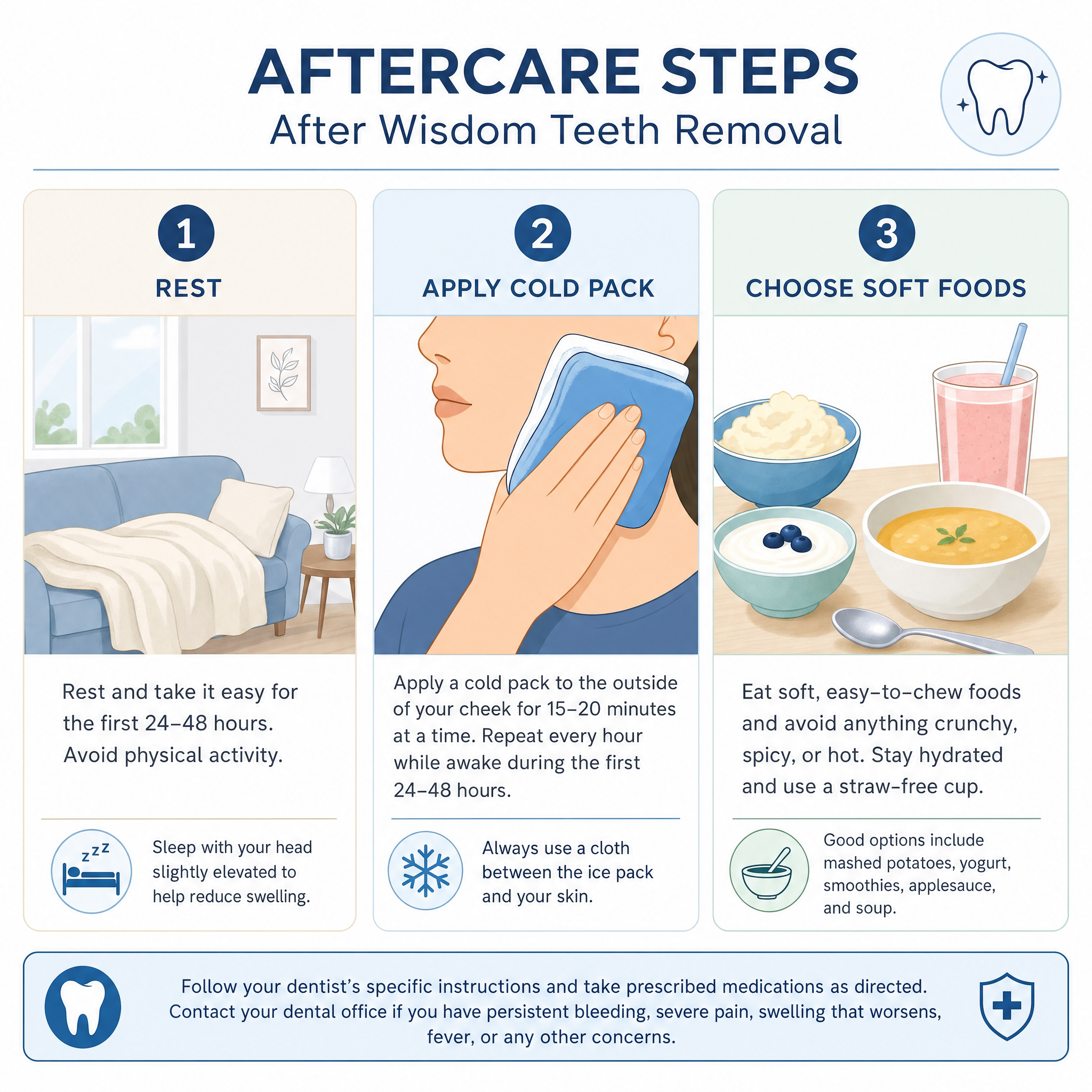
Recovery is rarely improved by doing more. Give yourself room to rest, particularly on the day of treatment, and avoid demanding exercise until your dentist says it’s appropriate.
Follow the written plan you were given
Your aftercare instructions may cover bleeding control, cleaning, medicines, food, activity and a follow-up appointment. Read them before the numbness has fully worn off if you can. If something in the plan is unclear, call the clinic instead of filling the gap with advice from social media or a friend whose procedure may have been quite different.
Use medicines only as directed by your treating clinician or according to the label. Don’t increase a dose because discomfort is stronger than expected. If the recommended medicine isn’t controlling your symptoms, or you’re unsure whether it can be taken with your usual medicines, seek advice.
Make eating easier for a few days
Choose foods that need little chewing and are unlikely to irritate the area. The written plan may suggest when to return to your normal diet. Drink enough water, chew away from the treatment site where practical and avoid testing the socket with your tongue or fingers.
Very hot food or drink can be hard to judge while your mouth is numb. Wait until sensation has returned enough for you to assess temperature and control chewing. Small, unhurried meals are usually easier than trying to eat normally straight away.
Protect the healing area
Follow the cleaning instructions supplied by your dentist. Vigorous rinsing, spitting or disturbing the area too early may interfere with the blood clot that forms in the socket. That clot is part of the normal healing process.
Smoking and vaping can also interfere with healing. If stopping is difficult, tell your dentist rather than avoiding the subject; they can explain why it matters for your procedure and point you towards appropriate support.
Keep the day simple. Rest, eat what you can manage, take medicines as directed and have the clinic’s contact details nearby.
When to call the clinic
Call if the recovery doesn’t seem to be following the plan you were given. You don’t need to diagnose the problem yourself. Describe what you’re feeling, when it started, whether it’s changing and any other symptoms you’ve noticed.
Contact the clinic sooner if:
- pain is getting stronger rather than gradually settling;
- bleeding continues despite following the pressure instructions you were given;
- you develop a fever or feel increasingly unwell;
- swelling is spreading or continues to increase;
- you notice a bad taste or smell together with worsening discomfort;
- you can’t keep fluids down or take the advised medicines; or
- numbness lasts longer than your dentist told you to expect.
Heavy bleeding, difficulty breathing, difficulty swallowing or rapidly increasing facial swelling needs urgent assessment. If the dental practice is closed, use an appropriate urgent medical service. Byford patients can also find contact information for an emergency dentist rather than waiting for a routine visit.
A phone call doesn’t automatically mean more treatment. The clinic may clarify an instruction, arrange an examination or direct you to urgent care, depending on what you describe. The key is to call while the problem can be properly assessed.
Frequently Asked Questions
How long does discomfort last after wisdom tooth removal?
There isn’t one exact number of days. Tenderness and swelling often feel more noticeable during the early part of recovery and should then begin to settle. A more involved removal may take longer to recover from than a straightforward one.
Use your own written plan as the reference point. If pain is worsening, returns strongly after improving or feels out of proportion to what your dentist described, contact the clinic rather than waiting for a particular day on the calendar.
How much time should I take off work?
It depends on the procedure and the work you do. Someone with a straightforward removal and desk-based duties may plan differently from someone having several teeth removed or doing physical work, driving or operating machinery.
Ask your dentist before the appointment so you can make a realistic plan. If possible, avoid committing to demanding work immediately afterwards. You may need extra time if swelling, tiredness or medicine affects your ability to perform your duties.
Can I drive home after the appointment?
That depends on the anaesthesia or sedation used. After local anaesthetic alone, your dentist will advise based on the procedure, your condition and any medicines given. After sedation, you shouldn’t assume you can drive yourself. You may need a responsible adult to take you home and remain available afterwards.
Confirm this before treatment. Sedation instructions can differ, and the clinic’s directions for your appointment should guide your travel and supervision arrangements.
What if I’m already in pain before the consultation?
Tell the clinic how severe it is and whether you have swelling, fever, trouble opening your mouth, difficulty swallowing or bleeding. Those details help staff judge how soon you need assessment. Don’t place aspirin or other substances directly against the gum, as this can irritate the tissue.
A dentist needs to establish whether the wisdom tooth is causing the problem. Decay, gum inflammation, another tooth or a jaw problem can produce pain in a similar area.
Do all wisdom teeth need removal?
No single recommendation suits everyone. Wisdom teeth that are healthy, functional and cleanable may be monitored, while teeth causing disease or threatening nearby structures may need treatment. Your symptoms alone don’t reveal the full position of the tooth, so an examination is needed before deciding.
For broader oral health concerns, the practice’s general dentistry information explains other areas of dental care. Separate information is also available for Cosmetic Dentistry – Mt. Nasura, Cosmetic Dentistry – Camillo and Cosmetic Dentistry – Kelmscott if your question relates to appearance rather than wisdom tooth symptoms.
Can I ask about payment arrangements before deciding?
Yes. It’s reasonable to understand the practical side before agreeing to treatment. The practice publishes health fund and payment options information, but your actual treatment needs and fees can only be established after assessment. Ask what the proposed care includes and whether further visits could be required.
This information is general and doesn’t replace advice from a dentist who has examined you. Consult a dentist for advice about your own symptoms, medical history and treatment options. Any surgical or invasive procedure carries risks. Before proceeding, you may wish to seek a second opinion from an appropriately qualified health practitioner.


